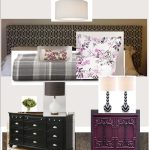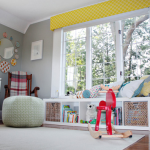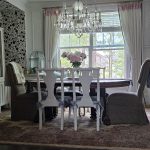
1. Line – involves motion
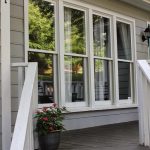
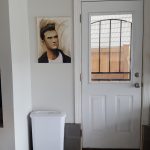
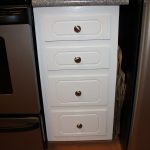
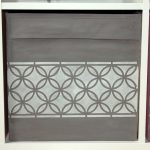
A line leads the eye.
It gives you a path to follow; whether around the room or through a landscape.
Lines are horizontal, vertical, curved, or diagonal.
In a room or space, remember to balance your lines.
2. Form – a series of lines enclosing a space
Form is closely related to line
The outline of a form can be straight or curved
3. Color and Value
Color is an element that has instant and universal appeal
Color is everywhere in nature; green trees, blue skies, red apples, orange carrots, etc.
One property of color is value; refers to the amount of lightness or darkness in a color. When decorating, color is ever constant. Consider the color of floors, walls, ceilings, furniture, fabric, and accessories. The color and value of each part is a large part as you consider an entire project.
4. Texture – is the surface feeling or appearance of an object. Texture appeals to the sense of touch and sight. Texture can be sensed in many ways:
A surface can be rough or smooth
Prickly or pebbly
Shiny or dull
Soft or hard
Texture can also be perceived; it creates a visual illusion; i.e. a tweed pattern printed on wall paper.
5. Pattern – the appearance of an organized design on a surface. Nature is the inspiration for much of the patterns we use in design:
The spotted pattern of a leopard or jaguar
The pattern of the wings of a butterfly
The beautiful swirls in marble or in some woods
Consider the size of patterns in relation to the size of the room.
Sizes of patterns are very important when it comes to decorating with fabrics, wall treatments, and rugs.
6. Light – an element that you can use to mold a room’s appearance and mood
Light drastically affects the objects on which it falls.
The amount and wavelength of light can change the appearance and color of the objects it touches.
For example: a neutral yellow paint color can have a soft appearance in the morning, but by midday, it can look bright sunshiny yellow. It depends on how much light touches the walls, and the time of day.
7. Space – defined as any enclosed area. In decorating, space is the room or rooms where you place furniture and accessories.
Space is 3 dimensional. It has length, width, and height. When placing furniture and other objects in a room, don’t just consider how they are placed against a wall, think about how they project into the space of the room. When you walk into an empty room, think about how to fill the space.
In some instances, empty space can be more effective than filled space. For example, you can overcrowd a room with furniture and accessories, when it only needs to be filled just enough for aesthetic or functional purposes. You want ‘walk room’ and the feel of space.
The Principles of Interior Design
The principles of interior design aren’t rules etched in stone, but rather guidelines that help you create satisfying living environments.
The principle of Balance
Types of Balance
Formal is the same as symmetrical balance
The centerline is a balance point for an arrangement
One half is the mirror image of the other half.
Informal or asymmetrical balance, unequal objects are placed at unequal distances from the centerline.
Radial – a circular balance. Objects are placed around a central pivot point.
Designing for Balance – to add visual interest, a decorator/designer may modify a basic formal balance. An informal plant arrangement can be added to a formal furniture setting so that it has a slightly less formal feeling.
The Principle of Proportion and Scale
These principles are closely related to the principle of balance.
Proportion is the relation of the size of one part of an object to the size of the object’s other parts. For example, a rectangle may be twice as long as it is wide. A rectangle’s length to its width gives you a proportion for this 2-dimensional shape. It gets compared to itself.
Proportion also involves 3 dimensions; length, width, and height. Consider whether a room’s length is too great for its width. Is the ceiling too high for the width and length in cases like this, you may have to visually alter the disproportion.
Painting a tall ceiling a dark color can reduce the visual height of the ceiling.
The wall at the end of a long narrow room may be painted a bright color to make the wall appear closer.
Scale – like proportion, scale involves size. It is defined as the relation of the object’s size to the size of one or more other objects in a room.
In scale, one object is compared to another object.
The scale of an object can be altered or changed without affecting its proportion or ration.
Some consider a rectangle more interesting than a square because a rectangle is twice as long as it is wide, and a square can be easily determined or evenly divided.
The Principle of Emphasis and Unity
Emphasis: developing a focal point – some focal points are inherent to a room; like a fireplace or picture window. Adding furniture or window treatments can enhance or presents a strong emphasis for these areas.
If a room does not have an inherent focal point, be creative and build one. Use color to create a visually interesting area. It emphasizes contrast.
Wall with a sofa grouping
Painting
Wall arrangement or collections (framed wall art, mirrors, clocks, or varied accessories)
With secondary focal points in a room, make one the dominant one, but unify them with a shared common element. For example, in an L-shaped room, one focal point may be in the dining area (china cabinet, (and the other (sofa grouping) in the living room. To unify the rooms, paint the walls the same color, or use area rugs of the same color.
Contrast can be used to develop a focal point
Contrast of sizes and shapes
Contrasts of colors and patterns
Contrasts of textures and styles
Unity – the idea that different parts belong together. Unity implies an orderly arrangement without discord, and it pleases us.
When hanging a group of pictures, make sure the spaces between the pieces are smaller than the actual sizes of the pieces. This creates unity or order.
Two aspects of unity are harmony and rhythm.
Harmony is achieved by combining design elements that have something in common. It should be a happy medium between dullness and confusion. The common factor may be in terms of line, form, color, texture, pattern, and etc.
Rhythm is achieved by the repetition of elements with similar qualities. For example, within a room, a line, shape, value, color, texture, or pattern may be repeated throughout.
Select a style whether it is:
Traditional
Modern
Eclectic
Formal or Informal
– Select an anchor fabric (something you will love and can live with for an extended period of time) with at least 3 colors.
– Use background color as wall color
– Use mid-tone colors for flooring and/or upholstered furniture (sofas and chairs)
– Anchor fabric or coordinating fabric can be used for sofa or other upholstered furniture pieces
Use bright colors from the anchor fabric for accessories and accents like welting/piping; picture mats and/or decorative pillows, etc.
Place anchor fabric in at least 3 places in the room (drapes, pillows, bedskirt).
Use coordinating fabric in other scales (larger or smaller) as accent fabrics on
Chairs
Pillows
Cording
Trim, etc
Divide colors using the 60/30/20 principle
60% of room in the background or lightest color (walls and floors)
30% in the mid-tone colors (sofa, flooring, drapes)
10% in the brightest, more intense accent color (trims, pillows, accessories, etc)
The colors can be reversed in the neighboring room/areas
Incandescent Bulb
The fat bulbs that most of us have been using for general lighting in bedrooms since childhood are known as incandescent light bulbs. These lamps have been the standard for a long time due to the natural, warm light they produce and their undeniable low price. These bulbs are also very easy to put on a dimmer control in comparison to other lamp types.
Disadvantage: with incandescent bulbs they consume two to three times more energy than the alternatives. This coupled with a much shorter lifespan (up to 1,500 hours) than its competitors makes incandescent bulbs an expensive option. This has led to a worldwide movement to ban their use before 2014 for the sake of energy. Some countries, including those in the European Union, have already begun this ban.
Halogen Bulb
Halogen bulbs are a type of incandescent lamp that produce an intense light with higher color temperatures than non-halogen incandescent lamps. Halogens are most often used in track lighting systems, ultramodern light fixtures, and, believe it or not, headlights. The intensity of the light makes halogen lamps a good choice for task lighting. Halogen light bulbs tend to initially cost more than non-halogen incandescent bulbs but make up for the difference with a longer lifespan (2,000 to 2,500 hours) and higher energy efficiency.
Disadvantage: they produce a lot of heat. This makes halogen lamps a bad choice for workspaces in close proximity to a halogen lamp or for children’s rooms due to safety issues. Note that you should never touch a halogen lamp with bare hands or leave flammable materials nearby. It is best not to leave with these lamps on for an extended period without someone close at hand.
Fluorescent Bulb
You more than likely associate fluorescent lamps with the long fixtures found in kitchens, laundry rooms, and garages. The fact is that fluorescent lamps comes in many different shapes and sizes and can be used for diverse purposes and in various light fixtures. Fluorescent lamps produce a large amount of white light that reveals detail without producing excess heat. This together with a low operating cost makes fluorescent bulbs a ideal choice for work areas. The lamps themselves tend to cost more than both incandescent and halogen bulbs since a ballast is required for the function of a lamp. However, fluorescent lamps last ten to twenty times longer (up to 25,000 hours) than incandescent lamps and is the most energy efficient of these three types, though the life of fluorescent bulbs may lessen if it is turned on and off frequently. Note that the life of a fluorescent bulb should be indicated on the packaging.
Disadvantage: One downfall for the fluorescent lamp is that it produces a very white light that does not seem as natural or warm as an incandescent bulb. This light has also been connected with the fading of paintings since it contains a high amount of UV rays. You may also notice that the bulbs become dimmer towards the end of their life and may not turn on in extremely cold temperatures. Fluorescent bulbs have also been accused of being harmful to the environment due to the mercury and phosphor materials contained inside. Because of this used fluorescent lamps typically cannot be disposed of as regular trash. The disposal procedure is usually regulated by local government agencies.
Compact Fluorescent Bulb (CFL)
This type of fluorescent bulb has been offered as a replacement for the incandescent bulbs that may be banned by 2014. They are closer to incandescent bulbs in size but retain the energy saving properties.The two most common shapes are U-shaped and spiral. Recent developments have also led to a light that is more natural and similar to the light produced by incandescent bulbs.
Making the Switch to CFL Bulbs
There are a few things that you should consider when converting to compact fluorescents.
Size
Though smaller than standard fluorescent lamps, compact fluorescent bulbs are nevertheless larger than incandescent bulbs. It is important to consider this since a compact fluorescent bulb might be too large for some of your fixtures.
Wattage
A fluorescent lamp produces five times more light than an incandescent of the same wattage. So if you are using a 100-watt incandescent lamp to light a room, a 20-watt compact fluorescent will produce roughly the same amount of light.
Light Temperature
The light produced by fluorescent bulbs typically has a bluish white quality that may not seem as natural as light from incandescents. You can get an idea of the color by taking a look at the color temperature indicated on the package. Light from an incandescent bulb typically has a color temperature of 2,700 K, so if you want a more natural light, you should purchase a compact fluorescent lamp of that same temperature. Bulbs with a temperature of 3,000 K to 3,500 K produce a neutral white light. Anything above 4,000 K will be closer to daylight.
In Conclusion…
There are actually many more types of light bulbs than the three described here. However these are the most popular for interior lighting. Less common types include LED (light emitting diode) and HID (high intensity discharge). Choosing the right light bulb is all in all a matter of preference and savings. Well, that goes for all but the ill-fated incandescent bulb
Article Source: http://EzineArticles.com/4142740
Three kinds of lighting
1. Ambient or general lighting – it is usually overhead lighting, and its primary function is to provide general lighting for a room.
– Chandeliers
– Ceiling mounted fixtures
– Ceiling fan lights
– Recessed
– Wall mounted
– Track lighting
– Step lights
2. Task – it is lighting that helps you perform a chore
– Desk lamps
– Table lamps – to achieve proportion between a lamp and the shade; the rule of thumb is the shade should be abt 1/3 the size of the height of the lamp from top to bottom. So, is the lamp is 36”, then the shade s/b 13” to 14”
– Floor lamps
– Under-counter mounted fixtures
3. Decorative or Accent lighting – illumination meant to draw the eye to a particular area.
– Ceiling mounted fixtures aimed directly at artwork or photos
– Scones
– Floor Up-lights – creates drama and elegance
– Step lights for stairs
– Rope lights
• Rope light can provide great accent lighting and is one of the most versatile types of accent lighting available.
• Use them in home theaters; around steps or elevated areas.
• It is perfect for lighting patios or gazebos and can even be mounted to patio umbrellas.
• It can be beautiful around deck railings and can be used as safety lighting along dark garden pathways and stairways.
• Rope lights work quite well over cabinets. When used over a wall of cabinets, they can produce a very soft glow throughout the entire darkened room.
• Toe kick lighting (subtle accent lighting placed in the toe kick area near the floor) is still another way that LED rope lights can add visual excitement to a living space.
• Installing rope lighting behind cove molding below a ceiling is a popular use of these accent lights. Because it produces a very soft glow this type of installation is especially effective when used as a night light in a child’s room.
• It can be used quite effectively as accent lighting around bar areas and in night clubs.
• Book shelves and small cabinets can glow with the addition of LED rope lights.
• Can be used both indoors and outdoors.